
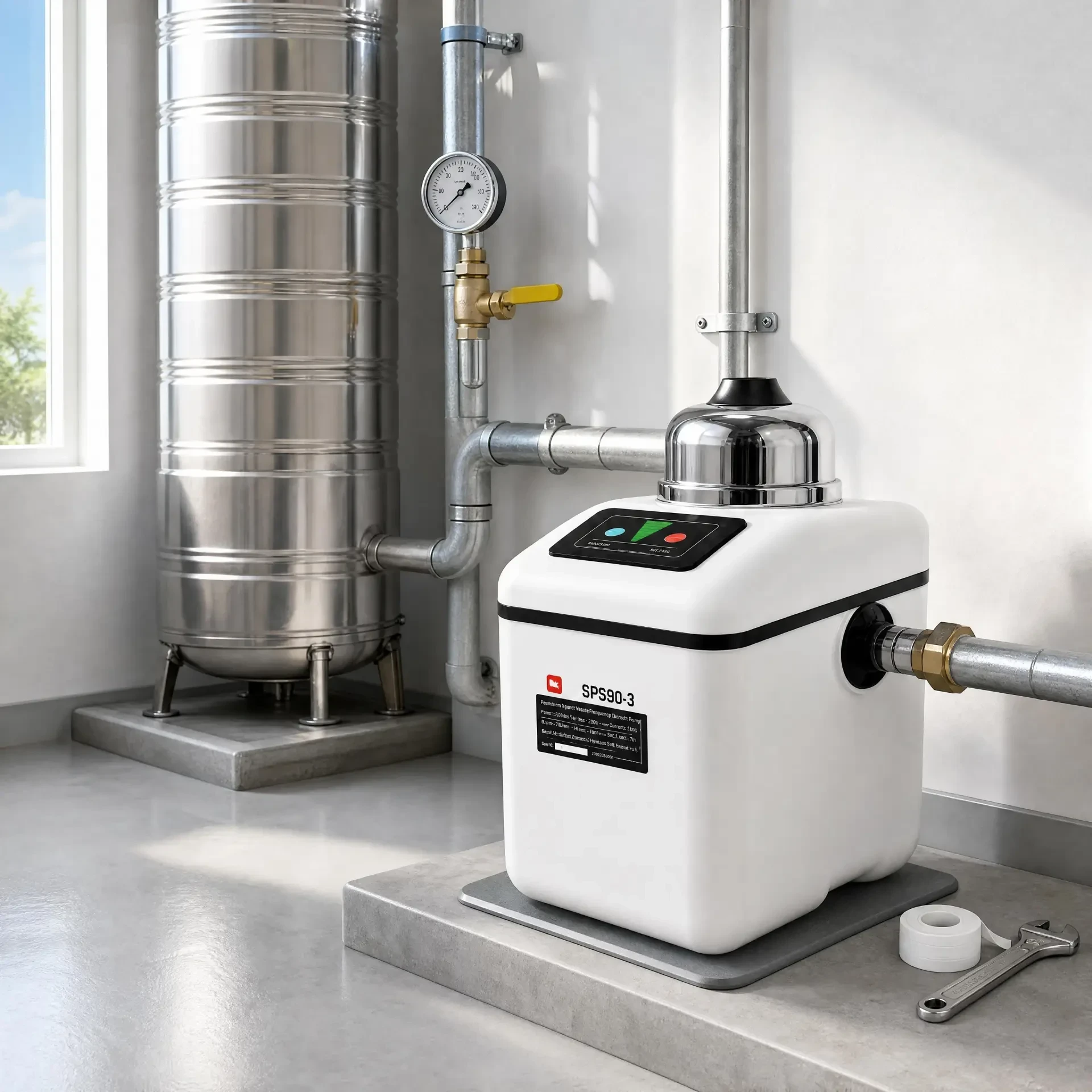
Both single-stage and multistage boosters can hold constant pressure, and both are built for whole-house boosting. The difference is how they build head. A single-stage pump uses one impeller, so head comes mainly from impeller diameter and speed. A multistage pump stacks impellers on one shaft, adding head stage by stage.
Choose single-stage when
- The lift is moderate and the site mainly needs flow.
- Space around the pump is limited and a compact body helps.
- Water comes from a tank or cistern at or near floor level.
- The duty is a whole-house supply, a light commercial line or a small garden system.
Choose multistage when
- The required head is high, or the outlets are several floors up.
- A long pipe run needs more pressure to overcome friction.
- The installation is a plant room, a closed-loop circuit or a pressurisation duty.
- Stainless steel wetted parts are preferred for the water being pumped.
Working between the two
In our range, the multistage family includes models such as SCS90P-3 and SPS90-3, which carry the same PM VFD control approach as the single-stage models. That means the control behaviour, the constant pressure set point and the motor technology stay consistent across the range, while the hydraulic part changes to suit the duty. Both structures appear in the whole-house boosting levels: different models reach the same level from a different body.
If both families could work on paper, compare the duty point against the model table and the boosting levels rather than the model name. The table gives maximum flow, maximum head, power stages and connection sizes for each model, which is enough to place your duty in the right part of the curve. If you would rather send the site details and let our team check it, use the inquiry form.