
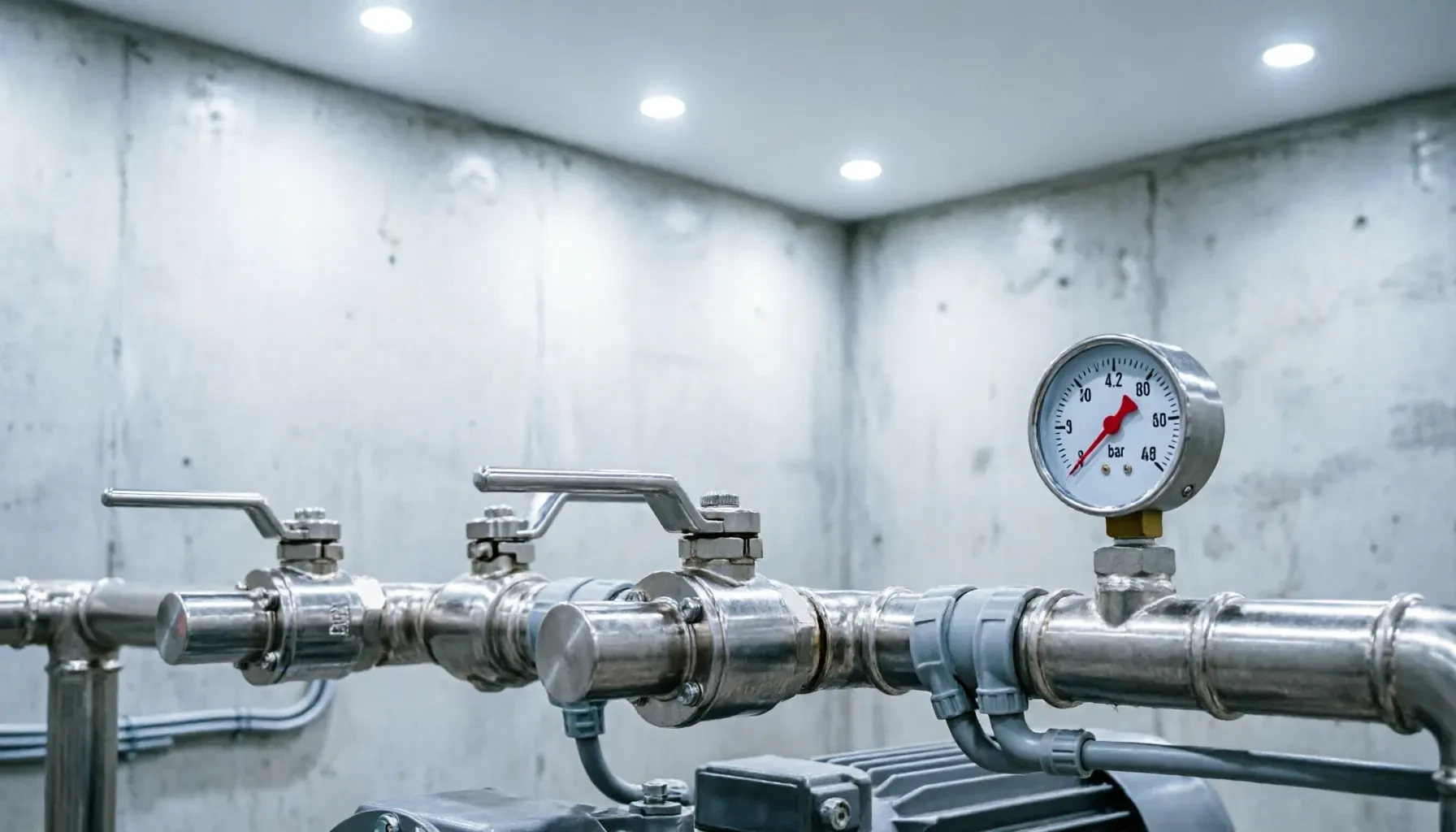
A permanent magnet (PM) variable frequency drive (VFD) booster pump changes its motor speed to hold a pressure set point instead of switching on and off at full speed. That behaviour is useful when demand changes through the day, but it does not change the basic rule of selection: the pump still has to match the duty point and the power supply on site. This guide covers the four numbers that decide a selection, how the range splits into boosting levels, and what to check before you order.
The four numbers you need before selecting
Write these four values down before you open a catalog. If any of them is missing, the selection is a guess.
- Flow: the litres or cubic metres per hour the site must deliver at the same time (for example, two showers plus a kitchen tap running together).
- Head: the height the water must be lifted, plus pipe friction and the pressure the outlet needs. Head is normally written in metres or in bar (1 bar is about 10.2 m of water column).
- Power supply: the available voltage and frequency (50 Hz or 60 Hz). All models are single-phase, and voltage range matters where the mains supply swings.
- Pipe size: the inlet and outlet connection size. A pump with smaller ports than the pipework adds friction losses.
Matching the duty to a boosting level
Every model in the range is built for whole-house boosting and suits all household water uses, so the level is chosen from the duty point rather than from the scene.
Level 1 covers standard whole-house duty up to 45 m head and up to 105 L/min, which suits apartments and single-family homes on mains or tank supply. Level 2 reaches 46 to 60 m head for multi-storey villas and self-built houses where the highest outlet sits well above the pump. Level 3 delivers up to 500 L/min at up to 28 m head for large properties with several outlet groups running together.
Pipeline boosting is the separate indicator for the DC range. Those models run from a 24 V supply and cover pipe boosting duty such as hot water areas, taps, and RV or caravan water lines rather than whole-house duty.
Reading a model table correctly
On every model page you will see columns for power, voltage and frequency, maximum flow and maximum head, plus the inlet and outlet sizes. Read them together: the maximum flow figure belongs to the lowest head, and the maximum head figure belongs to the smallest flow. The duty you need will sit somewhere between the two.
When a model offers several power stages, the same hydraulic body can cover several duties. The SPS-90, for example, is listed with five power stages in one model, which is useful for distributors who want to stock one body for several markets.
Inlet conditions and tanks
Check where the water comes from. A pump fed from a rooftop tank or a break tank is usually working on suction lift, so priming and dry-run protection matter. A pump fed from a pressurised mains line works on inlet pressure, and a check valve keeps water from flowing back.
If the tank is above the pump, gravity helps and the inlet is flooded. If the tank is below or beside the pump, keep the suction pipe short, use a strainer and avoid high points that can trap air.
What to confirm before ordering
Send the four numbers from the first section, plus a photo of the installation, the pipe material and any local certification the project requires. We will confirm the model, the voltage and frequency setting and the connection sizes in the quotation.
There is no fixed rule that a bigger pump is better. An oversized pump reaches the pressure set point quickly, then runs at a low speed or cycles, and the extra head is turned into noise and wear rather than useful flow.
Next steps
Work through the selection guide for a shortlist, then open a model page for the full specification and downloadable data sheet. When you are ready, our team reviews the duty and replies with a quotation.