
Calliope Pumps logoCalliope PumpsSmart VFD Water Pumps
Get a Quote / Inquiry
Technology

Why choose a smart VFD pump

A smart permanent magnet variable frequency pump adjusts motor speed to real water demand. This page sets out how that changes day to day performance, running cost and service life compared with a traditional fixed speed pump, and why the hardware costs more.

How it works

Permanent magnet motor and VFD, explained without the acronyms

A permanent magnet variable frequency pump keeps two jobs apart: the motor decides how efficient the pump is per revolution, and the controller decides how many revolutions are needed. Here is the sequence, and the diagram below shows where each part sits in a typical installation.

1. The controller reads the pressure

A pressure sensor on the discharge line feeds the actual line pressure to the controller many times a second and compares it with the set pressure the user chooses.

2. The VFD changes the motor speed

A variable frequency drive changes the frequency and voltage sent to the motor. Lower frequency means lower speed, so the pump delivers only the flow the taps, tank or system is asking for.

3. The permanent magnet motor runs at that speed

A permanent magnet rotor removes the copper loss of a conventional induction rotor, so the motor stays efficient across the whole speed range rather than only at full speed.

4. The result at the outlet

Pressure holds steady as demand changes, the motor stops at zero demand and restarts when a tap opens, and the unit runs without the repeated on/off cycling of a fixed-speed pump.

Installation diagram

Water source, booster with integrated controller, pressure sensor and delivery line. Schematic only, not to scale.

Water sourcetank or mainsPM motorVFDdriveintegrated boostersensorto tapspressure signal
The sensor signal closes the loop: the controller compares measured and set pressure, then adjusts motor speed instead of switching the pump on and off.

On energy figures. The saving from a variable frequency pump depends on the duty cycle of the installation, the set pressure and how much of the day the pump is throttled or cycling. We do not publish a single savings percentage: the honest answer is that the saving is measured against your own run hours, so ask for the duty point and we will size the model with you. Where a figure is quoted, it comes from a test with the condition stated.

The Manufacturer

The company behind the smart range

Intelligent, efficient, professional and customizable water systems for overseas B2B partners.

CALLIOPE PUMPS was established in 2019 in Fujian Province and builds on a pump manufacturing heritage that reaches back to 1958. We are a technology-driven manufacturer specialising in energy-efficient, intelligent residential water supply solutions, with our own R&D, production and global distribution of next-generation water systems.

Our portfolio covers high-end permanent magnet variable frequency pumps, smart DC booster pumps and solar water pumps. We combine variable frequency control with premium mechanical components such as high-end ceramic bearings and stainless steel impellers to deliver water pressure control that is quiet, stable and built to last.

We support global distributors, wholesalers and plumbing contractors with differentiated products, OEM/ODM manufacturing and documented quality control, so partners can position a premium range in their own market.

  • Intelligent
  • Efficient
  • Professional
  • Customizable

1958

Manufacturing heritage since

50,000 m²

Factory area

200+

Staff

20+

Engineers

Lower electricity costs

In Calliope standard laboratory tests, users saved approximately 40% on electricity costs. Result of Calliope standard laboratory testing. Actual savings vary with operating conditions.

Quiet operation

Permanent magnet motor and hydraulic design keep running noise low in living spaces.

Constant pressure

Steady outlet pressure across multiple outlets instead of rising and falling with demand.

Certified build

ISO 9001 quality system, CE marked products and SGS approved manufacturing.

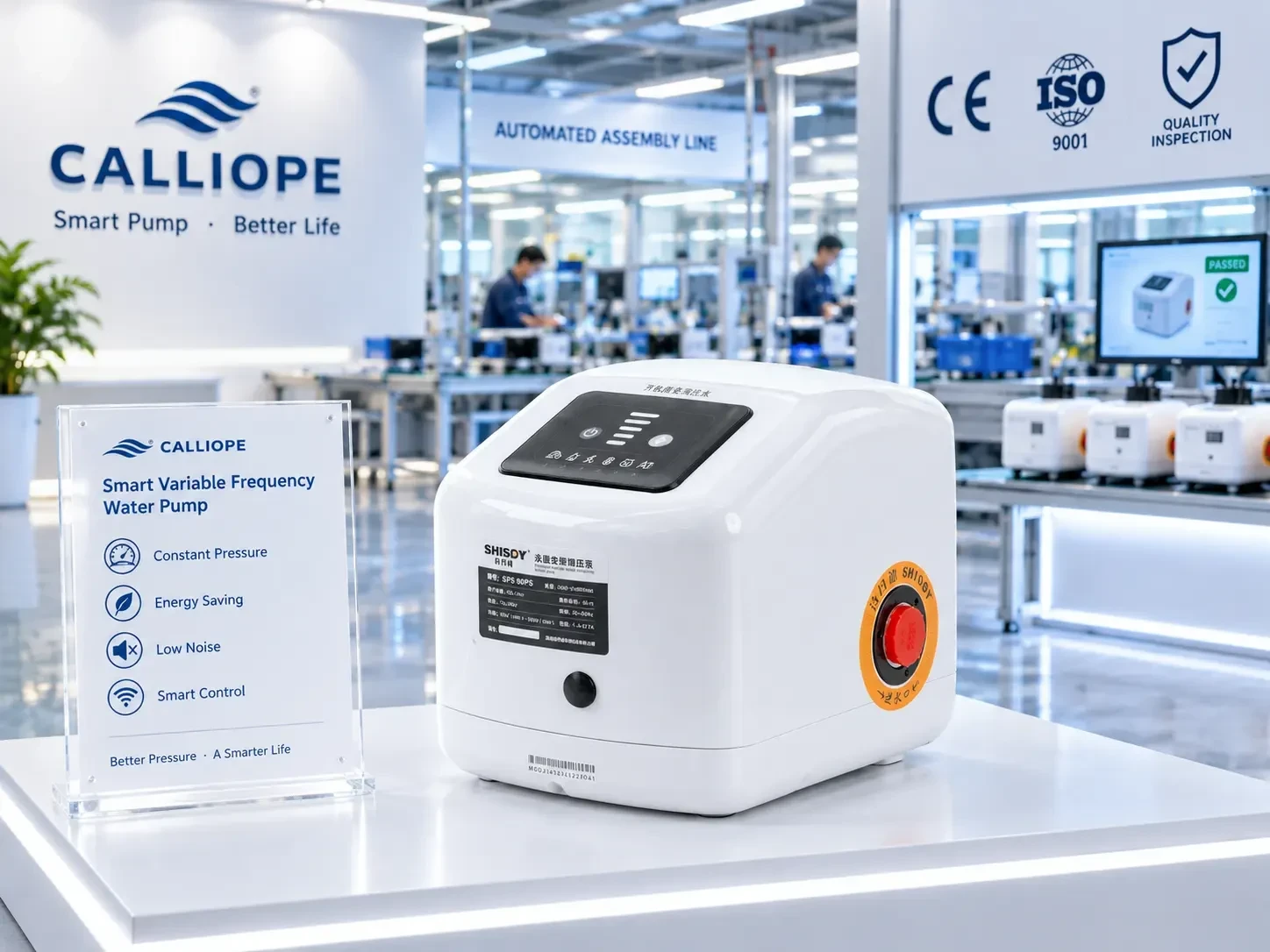
Automated assembly line for motor, hydraulic and control modules on the factory floor
Motor, hydraulic and control integration engineered in house.
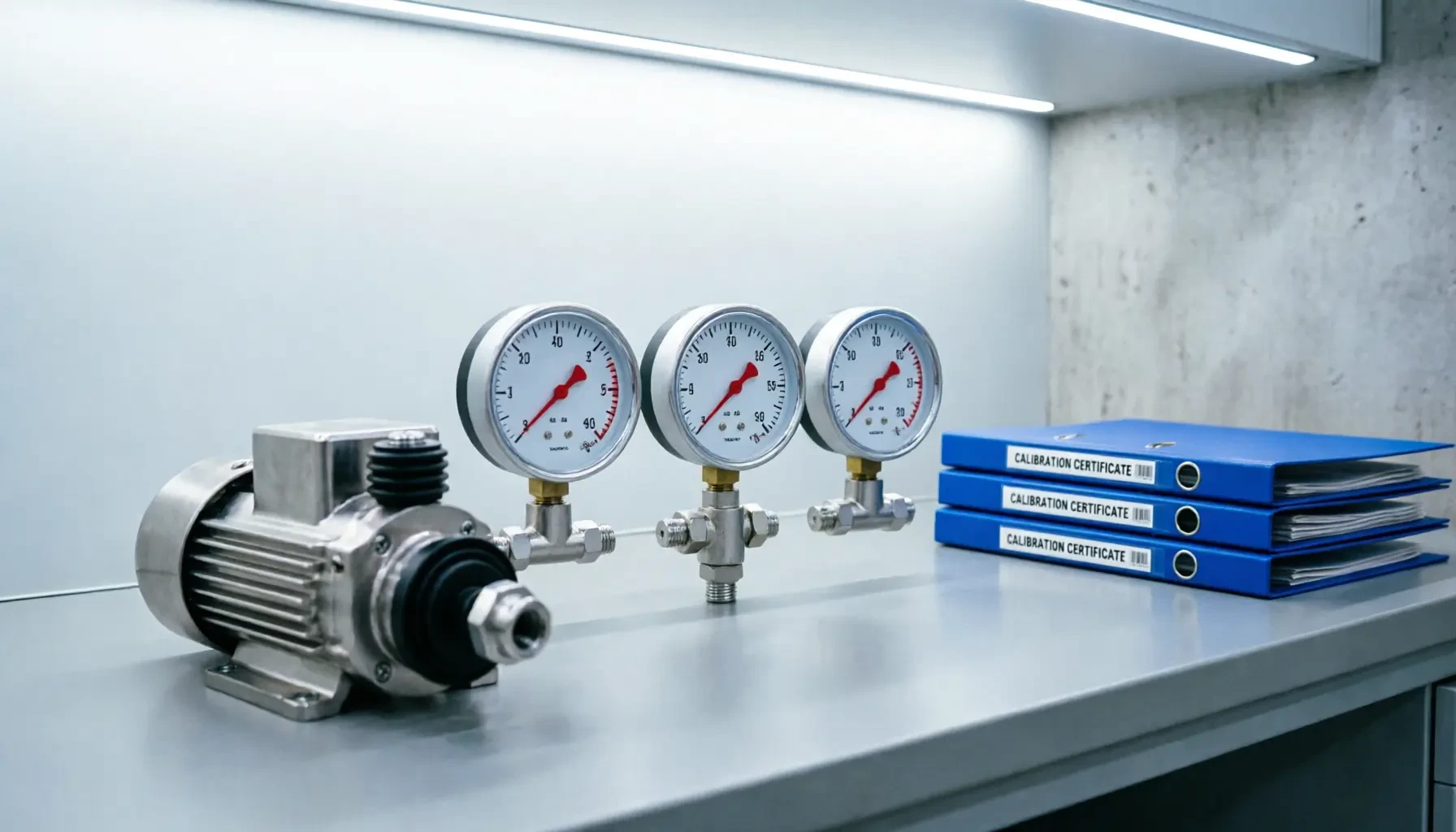
Compliance test bench with pressure gauges and calibration documents used for pump testing
Units run through pressure and flow testing before packing.
Cost And Value

Why the smart pump is priced higher

Three reasons explain the price difference against a commodity fixed speed pump.

01

Variable frequency instead of fixed speed

A traditional pump runs at full speed all the time, which shows up as higher electricity bills, constant noise and motor burnout over the years.

  • The motor speed is adjusted in real time against actual water usage instead of running flat out.
  • In Calliope standard laboratory tests, users saved approximately 40% on electricity costs, with the result depending on the duty and the site.
  • Lower running load and soft starting reduce thermal stress on the motor and control electronics.
02

Premium configuration and longer life

Low cost pumps save money with standard bearings, low grade shafts and thin windings. The flagship SPS90 is built differently on purpose.

  • High-end ceramic bearings for quiet running and resistance to wear.
  • Stainless steel impellers and reinforced nylon bodies keep the water path clean.
  • 5 stage intelligent power adjustment from 180 W to 380 W, so one model covers the duty of five traditional pump sizes.
  • One model across five duties reduces your inventory pressure and frees working capital.
03

Margin and positioning for your market

Old style pumps are heavily commoditised and competing on price alone leaves very little margin per unit.

  • A smart range gives your local market a clear technical reason to pay more.
  • You step out of the price war and build a reputation as a premium supplier.
  • Higher value per unit means each container and each dealer visit works harder.
Side By Side

Smart pump against traditional pump, point by point

Eleven dimensions that decide running cost, comfort and how often the pump comes back.

Performance and pressure

VFD smart pump
Variable frequency control holds a constant outlet pressure as demand changes.
Traditional fixed speed pump
Fixed speed running makes pressure rise and fall with every tap and shower.

Running noise

VFD smart pump
Permanent magnet motor, ceramic bearings and hydraulic design keep running noise low.
Traditional fixed speed pump
Motor runs at full speed all the time, so noise stays high around the clock.

Service life

VFD smart pump
Ceramic bearings, stainless steel impellers and speed control reduce wear on the motor.
Traditional fixed speed pump
Standard bearings, low grade shafts and constant full-speed load shorten service intervals.

Appearance and structure

VFD smart pump
Integrated housing with the controller built in, so the unit looks finished in a home or plant room.
Traditional fixed speed pump
Separate pump, tank and switch box assemblies that look industrial and take more space.

Human machine interaction

VFD smart pump
Smart control panel with status feedback, mode selection and protection alarms.
Traditional fixed speed pump
Mechanical pressure switch or simple starter with no status feedback.

Rust free, food grade materials

VFD smart pump
Stainless steel impellers and reinforced nylon bodies keep the water path free from rust and scale.
Traditional fixed speed pump
Cast iron bodies and untreated internals can corrode and discolour the water path.

Energy saving

VFD smart pump
Speed tracks real demand. In Calliope standard laboratory tests, users saved approximately 40% on electricity costs.
Traditional fixed speed pump
Full speed operation wastes energy whenever demand is below the design point.

Automatic start and stop

VFD smart pump
Starts on demand and stops when the outlet is closed, with no idle running.
Traditional fixed speed pump
Keeps running on a timer or pressure switch cycle, running when water is not needed.

Wide voltage range

VFD smart pump
Wide voltage tolerance keeps the pump working through unstable or low supply conditions.
Traditional fixed speed pump
Narrow voltage tolerance leads to tripping, stalling or motor damage on weak supply.

Premium market position

VFD smart pump
Gives distributors a differentiated smart range to sell in the premium segment instead of the commodity shelf.
Traditional fixed speed pump
Commoditised product that competes almost only on price.

After sales cost

VFD smart pump
Fewer burnouts and fewer service calls, which lowers warranty and field service cost for the channel.
Traditional fixed speed pump
Frequent motor burnout and pressure switch failures push up after sales cost.

In Calliope standard laboratory tests, users saved approximately 40% on electricity costs.

Result of Calliope standard laboratory testing. Actual savings vary with operating conditions.

Quiet operation: typically around 45 dB, with selected models as low as 40 dB, as measured under Calliope standard laboratory conditions.

For Distributors

What a smart range changes for your business

Beyond the end user benefit, the premium range changes how the product sells through your channel.

Discuss a Smart Range for My Market

A product story you can sell

Energy saving, constant pressure and quiet running are features a dealer can demonstrate, not just claim.

Lower after sales load

Fewer burnouts and fewer pressure switch failures mean fewer warranty claims and service visits.

One model, five duties

5 stage power adjustment from 180 W to 380 W lets a single model cover duties that needed five fixed speed sizes.

How It Works

In plain terms: how a PM VFD booster holds pressure

What the controller does

A pressure sensor on the outlet reports the line pressure to the controller. The controller compares that reading with the pressure set point and changes motor speed: speed rises when taps open and pressure falls, and falls again when demand drops. Because speed changes continuously rather than switching between on and off, the pump holds a steadier pressure at the outlet.

What the permanent magnet motor changes

The rotor carries permanent magnets instead of building a field by induction, and several models use a water-cooled motor and controller so heat is carried away by the water being pumped. The permanent magnet motor is also used across the range, so the control behaviour and the pressure setting logic stay consistent whether the site needs a single-stage or a multistage hydraulic body.

What it does not change

The pump still has to match the duty point, the power supply and the inlet conditions. A booster running far from its design duty will be noisier and draw more than a correctly sized unit, and a VFD controller does not replace a strainer, a non-return valve or dry-run protection on a suction-lift installation. If the site conditions are unclear, send them through the inquiry form and our team will check the selection.

Next step

Compare your duty point with a smart pump

Send us the flow, head, voltage and site conditions. We will reply with the recommended boosting level, power setting and documentation.

Request B2B Quote
Phone / WhatsApp
+86 178 0591 6566

Cookies on this site

Essential cookies and browser storage are needed for language, sign-in and to remember this choice. Analytics cookies (Google Analytics and Microsoft Clarity) help us measure how the site is used and are set when you visit. This site sets no advertising cookies. You can block non-essential cookies in your browser settings.

Cookie Notice