
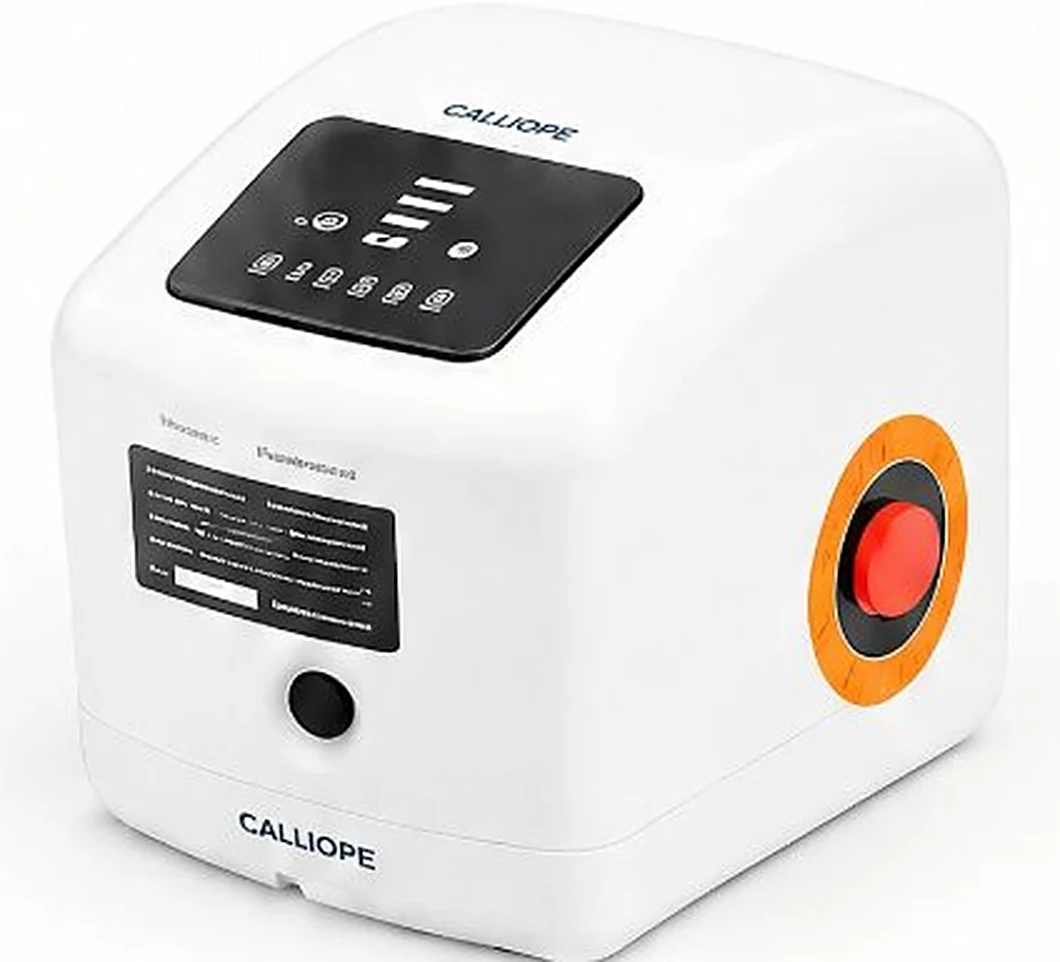
A permanent magnet (PM) variable frequency drive (VFD) booster pump is three modules in one body: a motor, a hydraulic end and a controller. What happens between raw parts and a boxed pump decides whether the unit holds pressure quietly for years or fails in its first season. This article follows the build — the three modules, the assembly line, the tests each unit passes, and how a batch is traced to the box it ships in.
Modelos usados como ejemplos en este artículo: SPS-90 bomba presurizadora inteligente vfd and SG95 bomba centrífuga para tubería de imán permanente, ambos listados en el bombas presurizadoras centrífugas monoetapa monofásicas grupo.
Three modules in one body
Every model in the range is built from the same three modules, matched to each other before assembly starts. The permanent magnet motor turns electrical energy into rotation; the rotor carries permanent magnets, so there are no brushes to wear and the motor runs efficiently across its speed range. The hydraulic end turns rotation into pressure: an impeller — or a stack of impellers on multistage models — moves water through a volute or diffuser, with stainless steel wetted parts on the multistage family. The controller is a variable frequency drive with a pressure sensor, a display and built-in protections: it reads line pressure and changes motor speed to hold the set point, starts the motor softly, and stops the pump when the source runs dry.
The three modules are matched, not mixed at random. The controller is set for the motor it drives, and the motor is sized for the hydraulic end it turns. That matching is what makes a model behave the same way in the field as it did on the test bench — and it is the first thing to check when comparing two suppliers that look alike on paper.
The assembly line, step by step
Assembly runs station by station, and each station checks the one before it. A fault caught at the motor station costs minutes; the same fault caught after packing costs a shipment.
- Motor: the stator is wound and inserted, the rotor is fitted and balanced, and the motor is closed and checked for free rotation.
- Hydraulics: the impeller and seals are fitted, clearances are set, and the hydraulic end is joined to the motor shaft.
- Controller: the drive board, pressure sensor and display are wired and fitted, and the control parameters are loaded for the model.
- Final assembly: the pump is fastened, labelled with its model and serial number, and given a last visual check before testing.
Tests every unit passes
No unit is packed without passing its tests. The exact checks depend on the model, but the sequence is the same across the range.
- Insulation: the motor windings are checked for insulation before the pump is powered.
- Pressure: the hydraulic end is pressure-tested so it holds water under load without leaking at joints or seals.
- Flow and head: the pump is run and its flow and head are verified against the published Q-H curve for the model. A unit that cannot meet its curve does not ship.
- Controller function: the drive is checked for soft start, pressure holding at the set point, and dry-run stop when the source runs empty.
- Noise: the SPS-90 is rated at or below 40 dB at 1 m when sized for its duty, and other models are rated at or below 55 dB. A pump running far from its duty point is louder, which is why correct sizing matters as much as the model itself.
Batch records and traceability
Each unit carries a serial number, and its test results are recorded against that number. The serial number also ties the unit to its component lots — the motor, hydraulic and controller batches it was built from. If a part lot ever shows a problem, the affected serial numbers can be identified instead of guessing which units are involved. That record is also what a warranty claim starts from: the model, the serial number and the test record for that unit.
For a buyer, the practical check is simple: ask the supplier how a unit is traced from its serial number back to its test record. A manufacturer that can answer that question has a process; one that cannot is assembling without one.
Packing for sea freight
Export packing protects the pump for a container journey, not just for a warehouse shelf. The pump is secured inside its carton so it cannot move, accessories and the manual are packed with it, and the carton is marked with the model, the serial number and handling marks. Cartons are strapped and palletised for container loading. The goal is that the unit arrives in the same condition it left the test bench in — which is why packing is treated as part of the build, not as an afterthought.
Próximos pasos
If you are appointing a supplier, the build process is one of the checks to run — our OEM / ODM page describes how custom and private-label builds are handled, and the certificates page shows the CE verification behind the range. For the models themselves, start with the product catalog and the selection guide.
¿Listo para especificar? Envíe su caudal, altura, alimentación eléctrica y diámetro de tubería a través del formulario de consulta , o escriba al equipo de exportación en WhatsApp .